
Never start from a blank page again.
The documents that eat the week, Statements of Advice, review packs, implementation plans, arrive drafted: built from the firm’s own templates and the client’s own record, waiting for the adviser to review. The advice stays yours. The typing goes.
Drafted in your firm’s own templates, on the firm’s own records.
Watch it draft a Statement of Advice.
One request. Operator pulls the client history, runs the fee and ASIC compliance checks, then composes the advice record from the firm’s knowledge. This is the product, not a mock-up.
The pack is built before you open it.
Ask for the Hendersons’ quarterly review and the pack assembles from what the firm already has: the template, the platform data, the quarter’s meetings, the record. Every section carries where it came from.
One section stays open. The recommendations are the adviser’s, and the draft waits for them.
The pack, drafted before anyone opens a document. The advice stays the adviser’s.
The document takes longer than the advice.
The thinking is done in the meeting. Then comes the blank template, the copy-paste from the CRM, the disclosures retyped for the hundredth time, and a week goes to a document whose substance was settled in an hour.
The advice is the work. The document should not be.
One discipline, five documents.
Each one is drafted the same way: the firm’s template, filled from the client record, the meetings and the platform data, with its sources on the record.
The same context that drafts the Statement of Advice drafts the implementation plan that follows it. Nothing is retyped between documents.
- Statements of Advice
- Records of Advice
- Quarterly reviews
- Implementation plans
- Portfolio updates
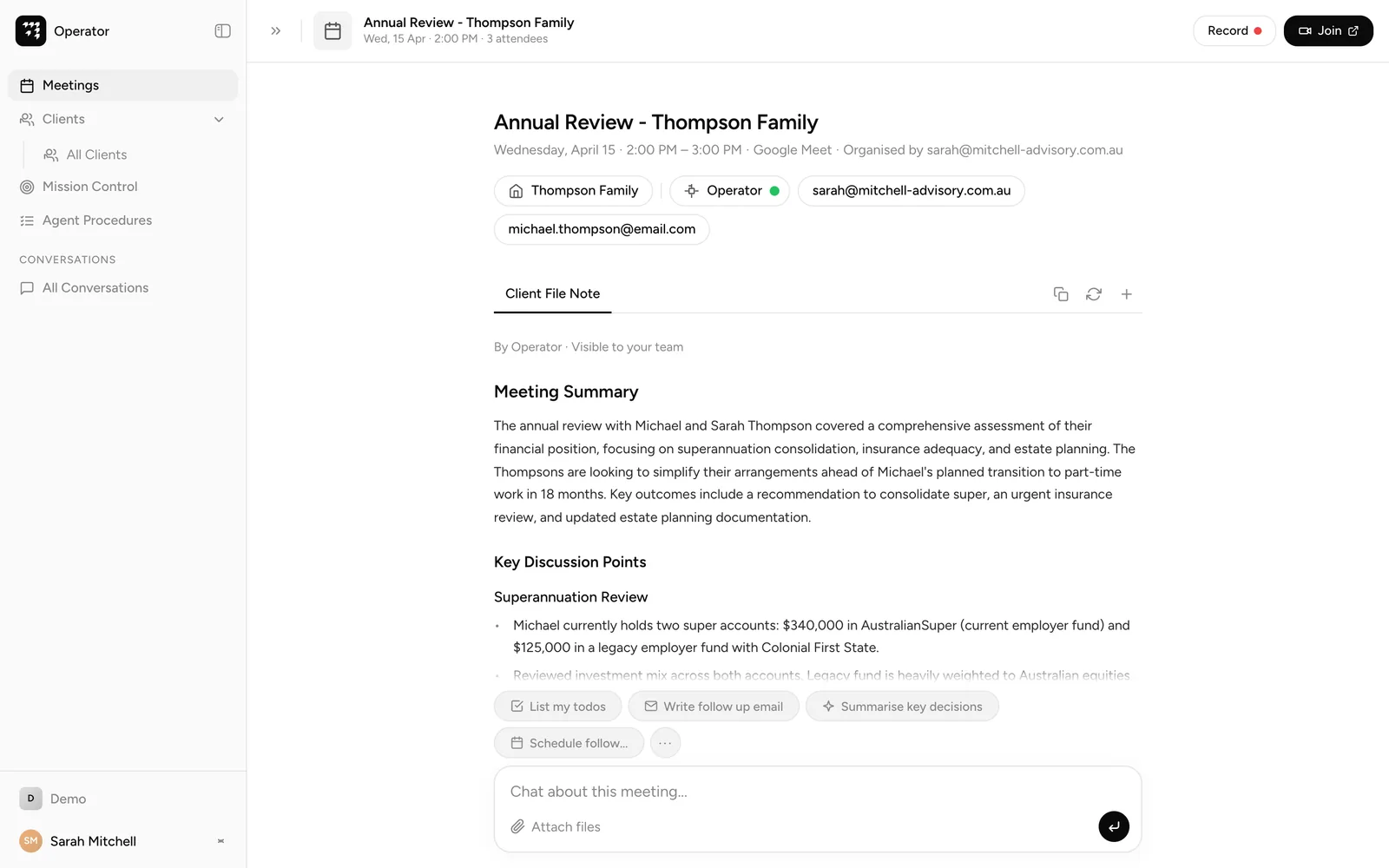
Operator, turning the meeting into the client file note.
Drafting is not advice.
Every draft passes through the adviser: changed, signed off or sent back. Nothing reaches a client on Alcova’s say-so, and the decision is recorded either way.
The full treatment of access and logging is on Security.
The questions firms ask first.
Does Alcova write the advice?
No. The advice is the adviser’s. Alcova drafts the document around it, the sections that repeat, the data that is already on file, and leaves the recommendations to the adviser.
Whose templates does it use?
The firm’s own. Drafts come out in the format the firm already uses, licensee requirements included, not a generic layout.
Which documents does it draft?
Statements of Advice, Records of Advice, quarterly reviews, implementation plans and portfolio updates, drawn from the same client record and meeting context.
Can a document go to a client without review?
No. Every draft waits for the adviser, who changes it, signs it off or sends it back. The decision is recorded either way.
Where does the content come from?
The firm’s CRM, the meeting record and the platform data the firm already receives, read with the adviser’s own permissions. The full treatment is on Security.
The blank page is gone. Operator runs the rest.
Drafting the documents is one part of it. Operator is the platform it runs on. A walkthrough shows the rest, or see pricing first.